
JETem
  • Home
  • About
    • Aim and Scope
    • Our Team
    • Editorial Board
    • FAQ
  • Issues
    • Current Issue
    • Ahead of Print
    • Past Issues
  • Visual EM
    • Latest Visual EM
    • Search Visual EM
    • Thumbnail Library
  • For Authors
    • Instructions for Authors
    • Submit to JETem
    • Photo Consent
    • Policies
      • Peer Review Policy
      • Copyright Policy
      • Editorial Policy, Ethics and Responsibilities
      • Conflicts of Interest & Informed Consent
      • Open Access Policy
  • For Reviewers
    • Instructions for JETem Reviewers
    • Interested in Being a JETem Reviewer?
  • Topic
    • Abdominal/Gastroenterology
    • Administration
    • Board Review
    • Cardiology/Vascular
    • Certifying Exam Cases
      • Clinical Decision-Making
      • Prioritization
      • Communication
      • Procedure & Ultrasound
    • Clinical Informatics, Telehealth and Technology
    • Dermatology
    • EMS
    • Endocrine
    • ENT
    • Faculty Development
    • Genitourinary
    • Geriatrics
    • Hematology/Oncology
    • Infectious Disease
    • Miscellaneous (stats, etc)
    • Neurology
    • Ob/Gyn
    • Ophthalmology
    • Orthopedics
    • Pediatrics
    • Pharmacology
    • Procedures
    • Psychiatry
    • Renal/Electrolytes
    • Respiratory
    • Social Determinants of Health
    • Toxicology
    • Trauma
    • Ultrasound
    • Urology
    • Wellness
    • Wilderness
  • Modality
    • Certifying Exam Practice Cases
      • Clinical Care Cases
      • Communication & Procedural Cases
      • Old School Oral Board Cases
    • Curricula
    • Innovations
    • Lectures
    • Podcasts
    • Simulation
    • Small Group Learning
    • Team Based Learning (TBL)
    • Visual EM
  • Contact Us

Issue 7:4

Use of An Ophthalmology Tutorial to Improve Resident Comfort with the Emergency Eye Exam

Jessica Pelletier, DO*, John Facciani, MD^, Francesca Gines, COA^ and Damon Kuehl, MD*

DOI: https://doi.org/10.21980/J86H0M Issue 7:4[mrp_rating_result]
By the end of this small group didactic, learners will be able to: 1) demonstrate ability to focus on the various components of the slit lamp exam 2) demonstrate understanding of a systematic approach to the eye exam 3) demonstrate appropriate use of the Diaton, iCare, and Tonopen tonometers.
OphthalmologySmall Group Learning

A Novel Module Based Method of Teaching Electrocardiogram Interpretation for Emergency Medicine Residents

Alexandra S Koutsoubis, MD*, Emily Fishbein, MD*, Megan Stobart-Gallagher, DO^, Behzad B Pavri, MD† and Jennifer White, MD^

DOI: https://doi.org/10.21980/J8Z06J Issue 7:4[mrp_rating_result]
After completion of the module learners should be able to: 1) correctly recognize and identify ECG abnormalities including but not limited to abnormal or absent P waves, widened QRS intervals, ST elevations, abnormal QT intervals, and dysrhythmias that can lead to sudden cardiac death; and 2) synthesize findings into a succinct but accurate interpretation of the ECG findings.
Cardiology/VascularSmall Group Learning

A Model Curriculum for an Emergency Medicine Residency Rotation in Clinical Informatics

Carrie K Baker, DO, MS1,2, Nivethietha Maniam, MD3, Benjamin H Schnapp, MD, MEd4, Nicholas Genes, MD, PHD5, Jeffrey A Nielson, MD, MS1,6,7, Vishnu Mohan, MD, MBI8,9, William Hersh, MD8 and Benjamin H Slovis, MD, MA10,11

DOI: https://doi.org/10.21980/J82P9H Issue 7:4[mrp_rating_result]
The aim of this curriculum is to teach informatics skills to emergency physicians to improve patient care and outcomes, utilize data, and develop projects to lead change.3 These goals will be achieved by providing a foundational informatics elective for EM residents that follows the delineation of practice for Clinical Informatics outlined by the American Medical Informatics Association (AMIA) and the American Board of Preventive Medicine (ABPM).
Clinical Informatics, Telehealth and TechnologyCurricula

Respiratory Distress in the Pediatric ED: A Case-based Self-directed Learning Module

Sravana Paladugu, MD*, Ngoc Van Horn, MD^ and Christine Kulstad, MD*

DOI: https://doi.org/10.21980/J8T64M Issue 7:4[mrp_rating_result]
Educational Objectives: By the end of this module, learners will be able to: 1) recognize the unique pathophysiology for respiratory distress in the pediatric population and formulate a broad differential; 2) understand the treatment principles for the most common causes of respiratory distress in children; 3) navigate and apply validated clinical decision-making tools for treatment of pediatric respiratory illnesses.
PediatricsLecturesRespiratory

Methemoglobinemia

Ibrahim Alagha, BS*, Ghadeer Doman, MD^  and Shaza Aouthmany, MD†

DOI: https://doi.org/10.21980/J8PH1B Issue 7:4[mrp_rating_result]
At the end of this simulation case, participants should be able to: 1) recognize shortness of breath, cyanosis and respiratory distress, and the difference between all of them based on the clinical presentation 2) identify the underlying cause of the condition by conducting a thorough history and physical 3) know how to identify and treat methemoglobinemia by ordering necessary labs and interventions and understand the pathophysiology leading to methemoglobinemia 4) recognize patient’s response to treatment and continue to reassess.
ToxicologySimulation

Torsade de Pointes Due to Hypokalemia and Hypomagnesemia

Mary Crista Cabahug* and Amrita Vempati, MD*

DOI: https://doi.org/10.21980/J8JP8G Issue 7:4[mrp_rating_result]
By the end of this simulation session, learners will be able to: 1) formulate appropriate work-up for altered mental status (AMS) 2) recognize hypokalemia and associated findings on ECG 3) address hypomagnesemia in a setting to hypokalemia 4) manage pulseless VT by following advanced cardiac life support (ACLS) 5) recognize and address TdP 6) provide care after return of spontaneous circulation (ROSC) 7) consult intensivist and admit to intensive care unit (ICU).
Cardiology/VascularSimulation
Creative Commons images

Mushroom for Improvement Case Report: The Importance of Involving Mycologists

Gary Bhagat, MD*, Marit Tweet, MD^ and Steven Aks, MD^†

DOI: https://doi.org/10.21980/J8ZW7W Issue 7:4[mrp_rating_result]
The mushroom displayed here is large and lacks any gills. Small puffball mushrooms can resemble young immature button top Amanita type mushrooms. Opening the Amanita mushroom should reveal apparent gills and quickly differentiate the two- -the puffball mushroom should have a white interior without gills.
Abdominal/GastroenterologyToxicologyVisual EM
Creative Commons images

A Case Report of a Man with Burning Arm and Leg Weakness

Carolina Ornelas-Dorian, MD* and Paul Jhun, MD*

DOI: https://doi.org/10.21980/J8V659 Issue 7:4[mrp_rating_result]
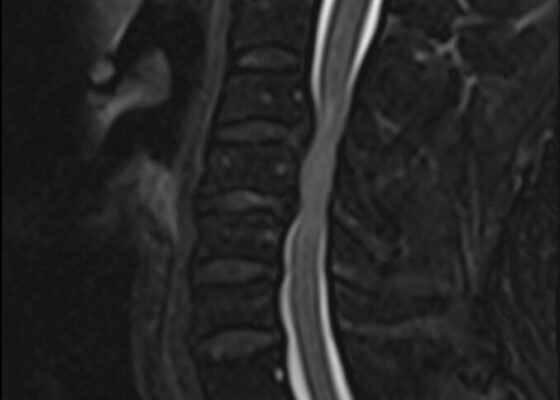
A non-contrast computed tomography (CT) of the head and neck was performed, followed by an MRI of the cervical spine. The CT demonstrated congenital narrowing of the cervical spinal canal, with posterior disc osteophyte complex and disc bulge at C3-4 and C4-5 (arrow). The T2-weighted MRI additionally demonstrated obliteration of the anterior and posterior subarachnoid space at the level of C3-C5, with associated patchy central cord signal abnormality (arrow).
NeurologyVisual EM
1›
Page 1 of 2

JETem is an online, open access, peer-reviewed, journal-repository for EM educators. We are PMC Indexed.

Most Viewed

  • Enhancing Emergency Medicine Resident Education: A Weekly Education Series to Augment Electrocardiogram Education
  • Development and Design of a Pediatric Case-Based Virtual Escape Room on Acute Iron Toxicity
  • Pre-Clinical Case Competition to Assess Confidence in Responding to Select Out-Of-Hospital Medical Emergencies
  • Pediatric Difficult Airway Simulation Day
  • Cards Against Pulmonology

Visit Our Collaborators


Creative Commons Licence
This work is licensed under a Creative Commons Attribution 4.0 International License.

About

Education

Learners should benefit from active learning. JETem accepts submissions of team-based learning, small group learning, simulation, podcasts, lectures, innovations, curricula, question sets, and visualEM.

Scholarship

We believe educators should advance through the scholarship of their educational work. JETem gives educators the opportunity to publish scholarly academic work so that it may be widely distributed, thereby increasing the significance of their results.

Links

  • Home
  • Aim and Scope
  • Current Issue
  • For Reviewers
  • Instructions for Authors
  • Contact Us

Newsletter

Sign up to receive updates from JETem regarding newly published issues and findings.

Copyright Creative Commons Attribution 4.0 International