
Simulation

Severe Sepsis Manifesting as A-Fib with Rapid Ventricular Rate
DOI: https://doi.org/10.21980/J8WG9WBy the end of this simulation session, the learner will be able to: 1) Recognize severe sepsis (please note – Centers for Medicare and Medicaid Services (CMS) Sepsis-I and II definitions are used throughout the case, as Sepsis-III has not been adopted by any emergency medicine organizations), 2) recognize atrial fibrillation, 3) review the importance of a thorough history and physical exam, 4) discuss the sepsis spectrum, 5) discuss the acute management of severe sepsis, 6) discuss common and uncommon sources of sepsis, 7) discuss appropriate empiric antibiotic options, 8) discuss common causes of newly-diagnosed atrial fibrillation, 9) review the different emergency medicine-based treatment modalities for uncomplicated atrial fibrillation, specifically atrial fibrillation with rapid ventricular rate.
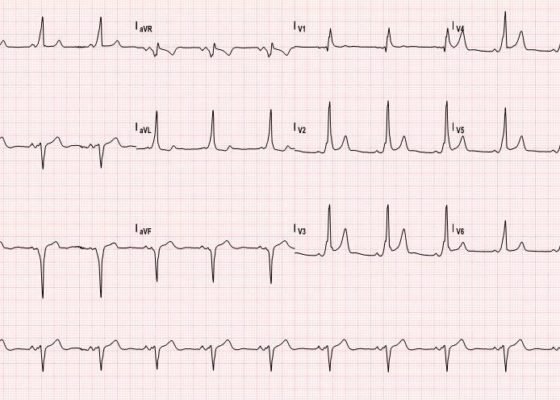
Management of Wolff-Parkinson-White Tachyarrhythmia Presenting as Syncope with Seizure-like Activity
DOI: https://doi.org/10.21980/J8534PAt the end of this simulation session the learner will: 1) Recognize clinical history suggestive of cardiogenic syncope, 2) recognize clinical evidence of Wolff-Parkinson-White syndrome, 3) promptly and appropriately treat unstable WPW tachyarrhythmia.
Precipitous Birth
DOI: https://doi.org/10.21980/J8192RBy the end of this simulation session, the learner will be able to: 1) Recognize impending delivery, 2) identify abnormal maternal vital signs and potential associated pathologies (eg: hypertension in preeclampsia), 3) discuss the evaluation and management of postpartum bleeding, 4) discuss the principles of neonatal resuscitation, 5) appropriately disposition the patients, and 6) effectively communicate with team members and nursing staff during resuscitation of a critically ill patient.
Pediatric Toxic Shock Syndrome
DOI: https://doi.org/10.21980/J8WK8JBy the end of this simulation session, the learner will be able to: 1) Recognize toxic shock syndrome. 2) Review the importance of a thorough physical exam. 3) Discuss management of toxic shock syndrome, including supportive care and the difference in antibiotic choices for streptococcal and staphylococcal toxic shock syndrome. 4) Appropriately disposition a patient suffering from toxic shock syndrome. 5) Communicate effectively with team members and nursing staff during a resuscitation of a critically ill patient.
Pediatric Sepsis Case Scenario
DOI: https://doi.org/10.21980/J8MK5XPediatric sepsis is a low-frequency, high impact condition. Nurses and physicians do not see it often, but must recognize and treat children with sepsis efficiently when they present. This makes pediatric sepsis education particularly amenable to simulation scenarios.
Status Epilepticus in the Emergency Department
DOI: https://doi.org/10.21980/J8RC7VAt the end of this simulation session, the learner will: 1) Demonstrate the management of status epilepticus 2) Justify when airway intervention is needed for status epilepticus 3) Describe risk factors for status epilepticus 4) Prepare a differential diagnosis for the causes in status epilepticus.
Anaphylaxis Simulation
DOI: https://doi.org/10.21980/J84S3WBy the end of this simulation-based session, the learner will be able to: 1) Recognize and diagnose anaphylaxis according to the criteria set forth by the NIAID and FAAN symposium 2) discuss the appropriate dose, concentration, and delivery route of epinephrine for anaphylaxis 3) list and discuss the rationale for the second-line therapeutic options used to treat anaphylaxis, and 4) develop an appropriate disposition algorithm to be used when managing anaphylaxis in the clinical setting.
Febrile Seizure Simulation
DOI: https://doi.org/10.21980/J81018At the end of this simulation session, the learner will be able to: 1) discuss the management of febrile seizures 2) discuss when placement of an advanced airway is indicated in the management of a febrile seizure 3) list the risk factors for febrile seizures 4) prepare a differential diagnosis for the causes of febrile seizures 5) educate family members on febrile seizures.