
JETem
  • Home
  • About
    • Aim and Scope
    • Our Team
    • Editorial Board
    • FAQ
  • Issues
    • Current Issue
    • Ahead of Print
    • Past Issues
  • Visual EM
    • Latest Visual EM
    • Search Visual EM
    • Thumbnail Library
  • For Authors
    • Instructions for Authors
    • Submit to JETem
    • Photo Consent
    • Policies
      • Peer Review Policy
      • Copyright Policy
      • Editorial Policy, Ethics and Responsibilities
      • Conflicts of Interest & Informed Consent
      • Open Access Policy
  • For Reviewers
    • Instructions for JETem Reviewers
    • Interested in Being a JETem Reviewer?
  • Topic
    • Abdominal/Gastroenterology
    • Administration
    • Board Review
    • Cardiology/Vascular
    • Certifying Exam Cases
      • Clinical Decision-Making
      • Prioritization
      • Communication
      • Procedure & Ultrasound
    • Clinical Informatics, Telehealth and Technology
    • Dermatology
    • EMS
    • Endocrine
    • ENT
    • Faculty Development
    • Genitourinary
    • Geriatrics
    • Hematology/Oncology
    • Infectious Disease
    • Miscellaneous (stats, etc)
    • Neurology
    • Ob/Gyn
    • Ophthalmology
    • Orthopedics
    • Pediatrics
    • Pharmacology
    • Procedures
    • Psychiatry
    • Renal/Electrolytes
    • Respiratory
    • Social Determinants of Health
    • Toxicology
    • Trauma
    • Ultrasound
    • Urology
    • Wellness
    • Wilderness
  • Modality
    • Certifying Exam Practice Cases
      • Clinical Care Cases
      • Communication & Procedural Cases
      • Old School Oral Board Cases
    • Curricula
    • Innovations
    • Lectures
    • Podcasts
    • Simulation
    • Small Group Learning
    • Team Based Learning (TBL)
    • Visual EM
  • Contact Us

Endocrine

Thyroid Storm

Kathryn Ritter, MD* and Carmen Wolfe, MD*

DOI: https://doi.org/10.21980/J8RW71 Issue 5:4[mrp_rating_result]
At the end of this practice oral boards case, the learner will: 1) assess a patient with altered mental status in an oral boards format; 2) review appropriate laboratory testing and diagnostic imaging; 3) identify signs and symptoms of thyroid storm and 4) review appropriate pharmacologic therapies with the proper sequence and timing.
EndocrineCertifying Exam Cases
Creative Commons images

Case Report of Spontaneous Thyroid Hemorrhage Following LMA Insertion

Gregory Podolej, MD* and Gary Bhagat, MD*

DOI: https://doi.org/10.21980/J8XP8W Issue 5:3[mrp_rating_result]
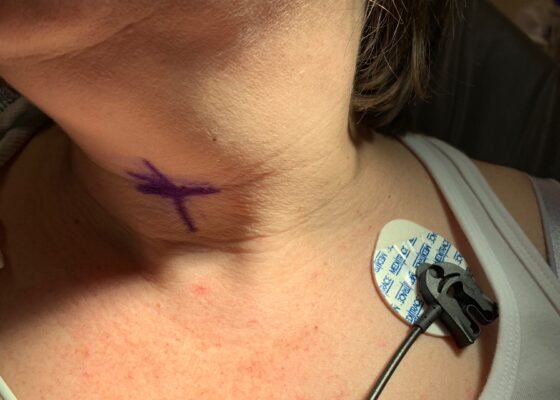
Two photographs of patients neck, both showcasing no obvious erythema, bruising, or swelling which is noteworthy because there is potential for airway compromise but there was nothing visible to indicate that on exam. CTA of neck showing thyroid nodule and potential thyroid hemorrhage (outlined in orange) on the left without evidence of airway compromise at the time of CT scan. Official read by attending radiologist states there is a “heterogeneous left thyroid nodule measuring 3 cm. Findings are suggestive of multinodular goiter with possible acute hemorrhage. Adjacent tract of soft tissue stranding in the anterior left neck with mild adjacent fascial thickening. This could represent small amount of hemorrhage or could be inflammatory.”
EndocrineVisual EM
Creative Commons images

The Elusive Pheo: A Case Report of Pheochromocytoma in the Emergency Department

Jason Cody Pickett, MD*  and Jonah Gunalda, MD*

DOI: https://doi.org/10.21980/J8KW63 Issue 4:4[mrp_rating_result]
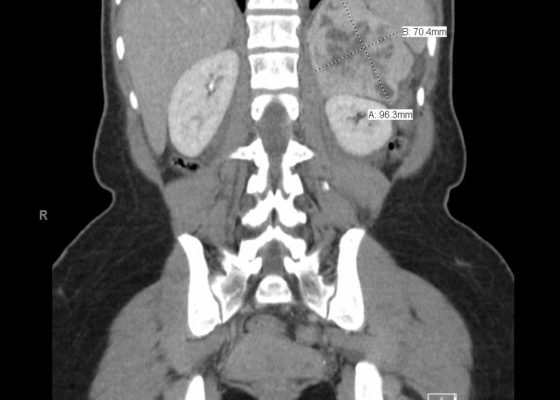
ED work-up: BMP within normal limits (WNL), white blood cell (WBC) 27.4, ECG showed sinus tachycardia, nonspecific ST segment abnormalities, BNP and troponin were within normal limits, HR 146 beats/minute, CT abdomen/pelvis showed a 10-cm-heterogenous enhancing left adrenal mass (anterior-posterior view [shown in red], lateral view [shown in blue]).
EndocrineVisual EM

Thyroid Storm

Natalie Ferretti, MD* and Jennifer Yee, DO*

DOI: https://doi.org/10.21980/J8XD03Issue 4:3[mrp_rating_result]
By the end of this simulation session, the learner will be able to: 1) understand the essential physical exam components necessary to evaluate for etiologies of acute encephalopathy, 2) review laboratory and imaging studies to obtain for evaluation of acute encephalopathy and/or suspected thyroid storm, as well as the rationale behind ordering each study, 3) identify underlying etiologies or pathologies for developing thyroid storm, 4) discuss treatment for thyroid storm.
EndocrineSimulation

Thyroid Storm in the Emergency Department

Christopher Eric McCoy, MD, MPH* and Reid Honda, MD*

DOI: https://doi.org/10.21980/J8234RIssue 4:3[mrp_rating_result]
By the end of this simulation-based session, the learner will be able to: 1) Recognize the signs and symptoms of thyroid storm and appropriately diagnose a patient with thyroid storm. 2) Choose appropriate medications for the treatment of thyroid storm. 3) Determine the appropriate disposition for a patient presenting in thyroid storm. 4) Discuss the rationale behind each drug used to treat thyroid storm. 5) List at least three precipitants of thyroid storm.
EndocrineSimulation

Novel Emergency Medicine Curriculum Utilizing Self-Directed Learning and the Flipped Classroom Method: Endocrine and Metabolic Emergencies Small Group Module

Geremiah G Emerson, MD*, Andrew King, MD*, Margaret Krebs, MD*, Diane Gorgas, MD*, Sandra P Spencer, MD^ and Michael G Barrie, MD*

DOI: https://doi.org/10.21980/J8792MIssue 3:4[mrp_rating_result]
We aim to teach the presentation and management of endocrine emergencies through the creation of a flipped classroom design. This unique, innovative curriculum utilizes resources chosen by education faculty and resident learners, study questions, real-life experiences, and small group discussions in place of traditional lectures. In doing so, a goal of the curriculum is to encourage self-directed learning, improve understanding and knowledge retention, and improve the educational experience of our residents.
CurriculumEndocrine

In-Flight Emergency: Altered Mental Status Secondary to Hypoglycemia

Nichole Niknafs, DO*, Robert Katzer, MD^ and Alisa Wray, MD^

DOI: https://doi.org/10.21980/J84M01 Issue 3:3[mrp_rating_result]
By the end of this simulation session, learners will be able to: 1) Discuss the challenges associated with in-flight emergencies. 2) List what is available in United States (US) commercial airline medical kits. 3) Discuss an appropriate differential diagnosis for a patient with altered mental status (AMS). 4) Demonstrate appropriate treatment of hypoglycemia. 5) Describe possible complications in diabetic patients with insulin pumps when flying. 6) Review the legal ramifications of responding to an in-flight emergency.
EndocrineSimulation
‹2
Page 2 of 2

JETem is an online, open access, peer-reviewed, journal-repository for EM educators. We are PMC Indexed.

Most Viewed

  • Enhancing Emergency Medicine Resident Education: A Weekly Education Series to Augment Electrocardiogram Education
  • Development and Design of a Pediatric Case-Based Virtual Escape Room on Acute Iron Toxicity
  • Pre-Clinical Case Competition to Assess Confidence in Responding to Select Out-Of-Hospital Medical Emergencies
  • Pediatric Difficult Airway Simulation Day
  • Cards Against Pulmonology

Visit Our Collaborators


Creative Commons Licence
This work is licensed under a Creative Commons Attribution 4.0 International License.

About

Education

Learners should benefit from active learning. JETem accepts submissions of team-based learning, small group learning, simulation, podcasts, lectures, innovations, curricula, question sets, and visualEM.

Scholarship

We believe educators should advance through the scholarship of their educational work. JETem gives educators the opportunity to publish scholarly academic work so that it may be widely distributed, thereby increasing the significance of their results.

Links

  • Home
  • Aim and Scope
  • Current Issue
  • For Reviewers
  • Instructions for Authors
  • Contact Us

Newsletter

Sign up to receive updates from JETem regarding newly published issues and findings.

Copyright Creative Commons Attribution 4.0 International